How Delhi Got Its Seven Cities: A Journey Through Time – From Mehrauli to Shahjahanabad
The Idea of “Seven Cities”
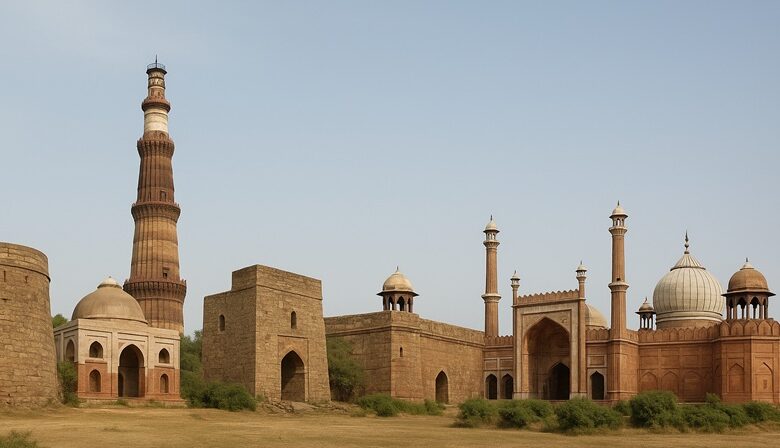
The Idea of “Seven Cities”
When historians speak of “The Seven Cities of Delhi,” they refer to the seven great capitals built by different dynasties. Each ruler who conquered Delhi seemed determined to leave his mark — raising new walls, new forts, and new dreams. These were not mere extensions but full-fledged urban visions. Together, they form the layered heart of what we now call Delhi.
1️⃣ Lal Kot / Qila Rai Pithora – The Beginning (11th–12th Century)
Our story begins with the Tomar Rajputs. Around the 11th century, King Anangpal II built a massive fortification in what is now Mehrauli — Lal Kot. It was Delhi’s first stone fort, surrounded by ramparts that once echoed with the sound of warriors and horses.
Later, Prithviraj Chauhan, the last great Rajput ruler of Delhi, expanded it and renamed it Qila Rai Pithora. This city became a symbol of Rajput resistance — until 1192 CE, when Muhammad Ghori defeated Prithviraj at the Second Battle of Tarain, forever changing Delhi’s destiny.
2️⃣ Mehrauli – The First Islamic Capital (13th Century)
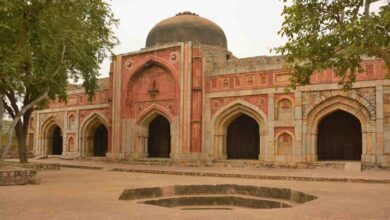
After the Chauhans, the Slave Dynasty under Qutb-ud-Din Aibak established Delhi’s first Islamic capital around Mehrauli. The new rulers reused and built upon existing Rajput structures, creating a blend of Indo-Islamic architecture still visible today.
The iconic Qutb Minar rose here — not just as a tower, but as a statement of power and faith. Surrounding it, tombs, mosques, and stepwells tell stories of transition — from Rajput valor to Sultanate grandeur. Mehrauli became the spiritual heart of Delhi, home to saints like Qutubuddin Bakhtiar Kaki, whose dargah continues to attract devotees centuries later.
3️⃣ Siri – The City of War and Wisdom (Alauddin Khilji’s Vision)
By the early 14th century, Alauddin Khilji wanted a capital that could defend against Mongol invasions. Thus, he built Siri — Delhi’s first planned city with high walls and circular bastions. It was said to be impregnable, a fortress of both military and intellectual might.
Though today only fragments of Siri Fort remain near South Delhi, the legacy of Alauddin’s ambition lives on — in Delhi’s taste for big dreams and bigger defences.

4️⃣ Tughlaqabad – The Stone Fortress of Power
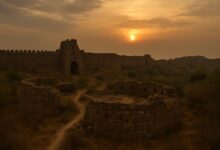
Next came Ghiyas-ud-Din Tughlaq, a ruler obsessed with fortifications. Around 1320 CE, he founded Tughlaqabad, a city carved out of stone and determination. Massive sloping walls, bastions, and citadels — every inch built to intimidate.
Legend has it that Tughlaq forced even the laborers building a nearby saint’s mosque to work on his fort. The saint, Nizamuddin Auliya, famously cursed, “Ya rahe ujjar, ya base Gujjar” — meaning “Let it remain deserted or inhabited by herdsmen.” Strangely, the curse came true; the mighty Tughlaqabad was soon abandoned.
5️⃣ Firozabad – The City by the Yamuna
Firoz Shah Tughlaq, a more benevolent ruler, built his city along the banks of the Yamuna — Firozabad. He brought an Ashokan pillar from Topra and placed it atop his new citadel, Feroz Shah Kotla. His city was filled with gardens, mosques, and colleges — a reflection of a ruler who valued both power and peace.
Even today, the ruins of Feroz Shah Kotla stand quietly near the modern-day Feroz Shah Kotla Stadium, a haunting reminder of the days when Delhi’s skyline was ruled by domes, not floodlights.
6️⃣ Shergarh / Purana Qila – The City of Sher Shah
By the 16th century, Delhi’s fate had changed again. Emperor Humayun began building his capital *Dinpanah*, but Sher Shah Suri defeated him and rebuilt it as Shergarh, now known as Purana Qila or the Old Fort.
Massive gates — Humayun Darwaza, Talaqi Darwaza, and Bara Darwaza — still guard the site. Within its walls, time seems frozen between Mughal refinement and Afghan military might. When you walk through Purana Qila today, you walk through layers of ambition — one emperor’s dream erased by another’s conquest.
7️⃣ Shahjahanabad – The Glorious Mughal Capital
Finally came Shah Jahan, the emperor of marble and magnificence. In 1639, he moved his court from Agra to Delhi and built the seventh city — Shahjahanabad, the jewel of Mughal India.
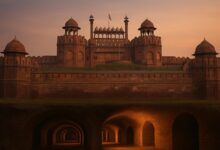
At its heart stood the Red Fort — the symbol of imperial power. Facing it was Chandni Chowk, a grand avenue lined with fountains, shops, and moonlit charm. The Jama Masjid dominated the skyline, while the walled city bustled with poets, traders, and courtiers.
Shahjahanabad was a city designed for celebration — of architecture, of art, and of life itself. Even after centuries, its soul survives in the spice-scented lanes of Old Delhi.
The Overlapping Cities – A Living Palimpsest
Unlike many ancient cities that disappeared under the sand, Delhi’s older capitals were never entirely erased. Each new ruler built beside or atop the last — creating a living palimpsest of cultures. A single metro ride today can take you from Mehrauli’s medieval ruins to Chandni Chowk’s Mughal heart — a journey across 800 years in under an hour.
That’s what makes Delhi unique. It’s not seven cities anymore — it’s one eternal city, continuously reborn.
Modern Delhi – The Eighth City?
When the British shifted their capital to Delhi in 1911, they created New Delhi — some call it the “eighth city.” Lutyens’ Delhi, with its straight avenues and domed vistas, added yet another layer to the story.
Today, skyscrapers rise beside crumbling tombs, and metro lines run under ancient forts. But the soul of Delhi — layered, restless, and resilient — remains unchanged.
Conclusion – Delhi, the City That Refuses to Die
Every wall of Delhi has seen conquest and coronation, ruin and rebirth. Its cities may have fallen, but its spirit never did. From Mehrauli’s silent stones to Shahjahanabad’s crowded lanes, Delhi continues to remind us: Empires fade, but stories remain.
Maybe that’s why Delhi isn’t just a city — it’s history that still breathes.