Paranthe Wali Gali: Once Royal, Now Nostalgic
Where Delhi’s fried aroma will tell stories of emperors, chaos, and the comfort of a golden paratha.
Where Royalty Will Meet the Street
Centuries ago, during the Mughal era, paranthas will not be a street snack — they will be royal indulgence. Stuffed with khoya, dry fruits, and silver leaf, they will grace the dining tables of emperors and courtiers. And when Shah Jahan will build Chandni Chowk, the city’s heartbeat, this lane will soon be blessed by his chefs and traders alike.
Years later, when the Mughal empire will fade, the recipes will slip from royal kitchens into the hands of halwais and shopkeepers — men who will turn royal luxury into public comfort. By the late 1800s, the lane that once led to courtiers’ homes will become a paradise for paratha lovers — earning its immortal name: Paranthe Wali Gali.
The Golden Lane of Chandni Chowk
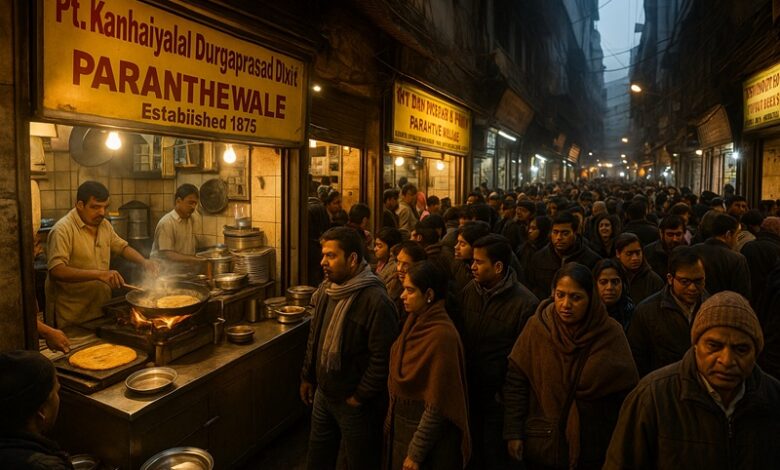
By the time Delhi will become India’s capital, Paranthe Wali Gali will already have built its legend. A narrow stretch lined with sizzling tawas, walls blackened by time, and signboards fading under grease and glory. The shops — *Pt. Kanhaiyalal Durgaprasad Dixit Paranthewale*, *Pt. Gaya Prasad Shiv Charan*, *Pt. Baburam Devi Dayal* — will become generational legacies, each claiming a secret recipe, each holding its own loyal crowd.
And though modern Delhi will rush past in metros and malls, this gali will move to an older rhythm — slow, smoky, and full of heart.
How Delhi Will Continue to Eat Its Memories
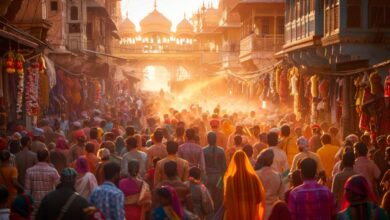
Every weekend, foodies will pour in from all corners of the city. Some will come searching for nostalgia, others for Instagram shots. But the moment they will take that first bite — crispy outside, soft inside, stuffed with magic — they will understand why this gali has never died.
Here, every parantha will tell a story. The *aloo parantha* will whisper of comfort. The *nimbu parantha* will sing of Delhi’s tang. The *rabri parantha* will hum about indulgence. Even the humble *mirch parantha* will remind Delhi that spice is life.

And while the city outside will evolve, inside Paranthe Wali Gali, time will stand still — trapped between a frying pan and a smile.
The Ritual That Will Never Change
Walk into any shop and you will be greeted the same way your grandparents were. Steel thalis, tiny benches, and a smiling man behind a hot tawa. You will order your choice of paranthas, and soon, a golden triangle will land before you — puffed, shiny, dripping with ghee. Alongside will come a small mountain of chutneys, pickles, and spicy aloo sabzi.
The ritual will be the same for decades. Tear, dip, bite, smile — and repeat. Because Paranthe Wali Gali will not just serve food; it will serve familiarity. A taste of belonging in a city that keeps changing too fast.
When the Famous Will Come to Eat
Over the years, the gali will attract everyone — from Nehru to Indira Gandhi, from Raj Kapoor to Rishi Kapoor. Foreign tourists will click pictures, food bloggers will write reviews, and chefs will try to recreate the recipes in five-star kitchens. But none will capture the charm of sitting shoulder-to-shoulder with strangers in a narrow lane, hands oily, hearts full.
Because some food will always taste better when it’s shared with chaos.
The Ghee Will Keep Flowing
Critics will call it unhealthy. Nutritionists will frown at the ghee. Modern Delhi will replace paranthas with avocado toasts. But Paranthe Wali Gali will stay unbothered. Its recipes will not bow to trends; its ghee will not fear calories. For it will know one truth — taste is timeless.
Even decades from now, when a new generation will walk through those lanes, they will find the same aroma — unchanged, unapologetic, unforgettable.
The Gali That Will Outlive Time
As dusk will fall and lights will flicker on, the street will shimmer with a golden glow. Vendors will clean their tawas, families will pack their leftovers, and the walls will once again soak in the day’s laughter. Somewhere between the smell of frying ghee and the sound of closing shutters, Paranthe Wali Gali will whisper to itself — “I have fed empires, generations, and memories. I will feed more.”
And when Delhi will sleep, the aroma of paranthas will still linger in the air — a promise that next morning, history will be served again, hot and crisp.
Conclusion – Where Tradition Will Always Be Fried Fresh
Paranthe Wali Gali will remain more than a street. It will be Delhi’s kitchen of memory — a place where time, taste, and tradition will keep meeting every day. Long after new food fads will fade, this gali will continue to fry history, one parantha at a time.
Because in Delhi, food will not just be eaten — it will be remembered.
Also Read: Why These Places Are Viral on Instagram