When Delhi Dances: The Lost Art of Qawwali Nights
How Delhi’s Courtyards Will Once Again Echo With Sufi Songs and Soulful Claps
The Soul of a City Will Sing
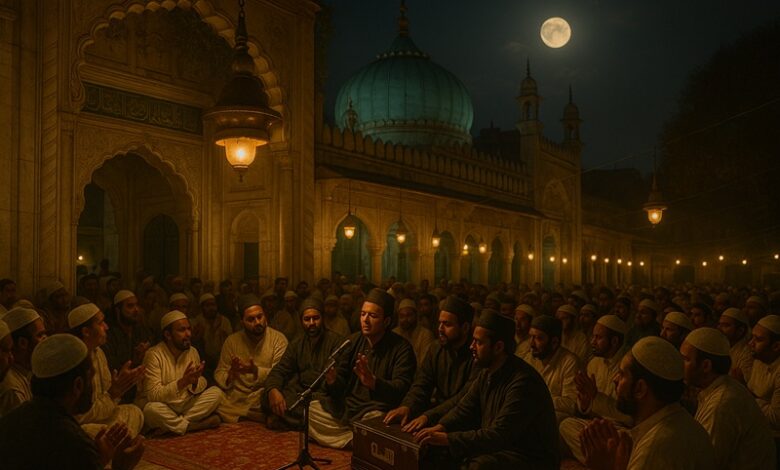
Before Delhi became a city of skyscrapers and speed, it was a city of sound — of Sufi verses, poetry, and music that touched the divine. The Qawwali nights of Delhi will not just be performances; they will be prayers. When the sun will set over Nizamuddin, lights will glow near the dargah, and singers will sit cross-legged, harmoniums ready, waiting for the first verse of praise.
In those moments, Delhi will not just listen — it will feel. Every clap will carry centuries of faith; every note will tell a story older than the city itself.
From Amir Khusrau to the Present
Centuries ago, poet and musician Amir Khusrau will compose verses in Persian and Hindavi that will become the soul of Qawwali. His mentor, Hazrat Nizamuddin Auliya, will sit in spiritual trance as disciples sing of love, longing, and divine union. These evenings will become Delhi’s heartbeat — gatherings where faith and art will blend seamlessly.
In the years to come, Delhi’s lanes around Nizamuddin will become the cradle of Qawwali — its rhythm, its philosophy, its heart.
When the Courtyards Will Overflow
There will be nights when the courtyard of Nizamuddin Dargah will overflow with devotees, tourists, poets, and dreamers. The sound of the dholak will mix with the fragrance of rose petals. Voices will rise in unison — “Khusrau, Darya prem ka, ulti wa ki dhar…”
Men and women, locals and foreigners, rich and poor — all will become one. That will be the magic of Qawwali: it will erase differences and make everyone part of the same rhythm.

When Silence Will Take Over
But as time will pass, Delhi’s Qawwali culture will begin to fade. Traffic will drown out the harmonium. Commercial events will replace sacred gatherings. The youth will scroll through songs instead of sitting in mehfils. The poetry will stay in textbooks, not on lips.
The few Qawwals who will remain will perform for passion, not fame — carrying on a tradition that deserves to be celebrated, not forgotten.
The Revival That Will Begin
Yet Delhi never forgets its music for long. The Qawwali nights will begin to return — through Sufi festivals, heritage walks, and revival concerts. Dargahs like Nizamuddin and Hazrat Inayat Khan will once again glow with sound. Students will learn the art; the old ustads will teach the young how to sing not just with voice, but with soul.
Delhi’s Qawwali will rise again, this time amplified through social media, yet grounded in the same emotion — love for the divine.
When Delhi Will Dance Again
One night, the lights of Nizamuddin will flicker again. The tabla will start, and an old qawwal will hum the first note. People will gather, some kneeling, some standing, some closing their eyes. The song will grow louder — not just in volume but in spirit. And once again, Delhi will dance — not in clubs or festivals, but in the language of the soul.
Because Qawwali is not entertainment; it’s enlightenment in melody. And Delhi, the city of saints and seekers, will always find its way back to that rhythm.
Conclusion – The City That Will Never Forget Its Song
From Khusrau’s poetry to Nizami brothers’ stage, from dargah courtyards to Spotify playlists — Qawwali will continue to flow through Delhi’s veins. Its beats will fade and rise, but never die. Because Delhi’s heart will always beat in 6/8 rhythm — with a clap, a chorus, and a prayer.
And someday soon, under the moonlight of Nizamuddin, the lost art of Qawwali nights will return — louder, purer, eternal.